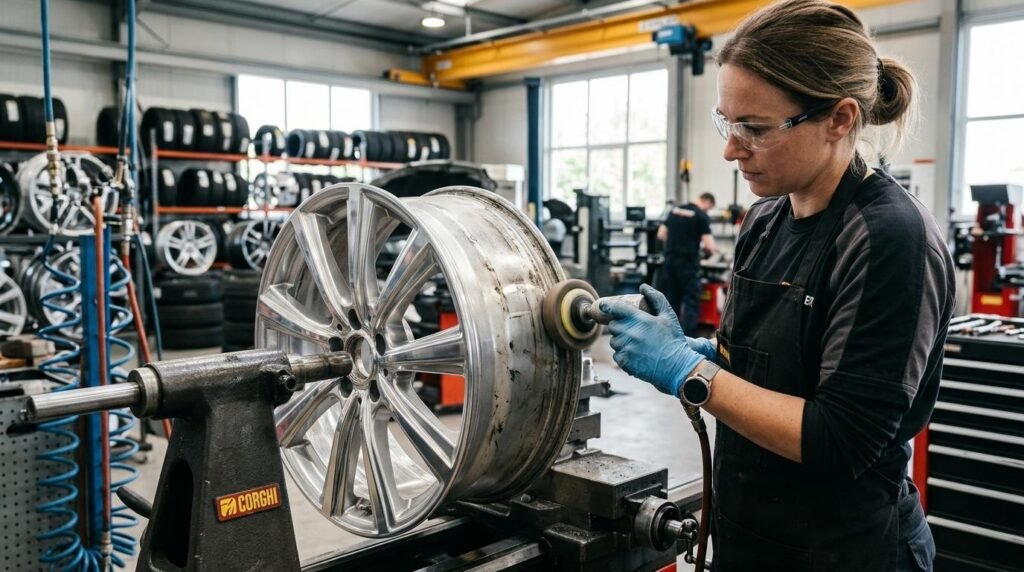
Alloy wheels are constantly exposed to road conditions, brake dust, moisture and everyday wear. Over time, this can leave them looking scratched, faded or damaged.
Whether your wheels have kerb marks, peeling paint, corrosion or an outdated finish, professional alloy wheel refurbishment can help restore their appearance.
If you have never used an alloy wheel refurbishment service before, you might be wondering what actually happens during the process.
Understanding each stage can help you know what to expect and why professional preparation is important for achieving a quality finish.
1. Initial Inspection and Assessment
The first stage of professional alloy wheel refurbishment is a detailed inspection.
Each wheel needs to be assessed to identify its existing condition and determine the most suitable refurbishment method.
During the inspection, specialists may look for:
- Kerb damage and surface scratches.
- Peeling paint or damaged lacquer.
- Corrosion and discolouration.
- Previous repair work.
- Cracks, bends or other structural damage.
This assessment helps establish whether the wheel is suitable for cosmetic refurbishment or requires further investigation.
Any structural damage should be professionally assessed before the wheel is considered safe for use.
2. Removing the Existing Finish
Once the refurbishment method has been agreed, the existing damaged finish may need to be removed.
Old paint, lacquer and other coatings can prevent new finishes from bonding correctly if they are not properly prepared.
Suitable stripping and preparation methods are used to create a clean surface for the next stage.
The exact process depends on the wheel’s material, existing coating and overall condition.
3. Cleaning and Surface Preparation
Surface preparation is one of the most important parts of alloy wheel refurbishment.
Even small amounts of dirt, grease or contamination can affect the final finish.
The wheels are thoroughly cleaned and prepared to remove unwanted materials and create a suitable surface for refinishing.
Where appropriate, minor cosmetic imperfections may also be addressed during this stage.
Good preparation helps achieve a more consistent and professional appearance.
4. Choosing Your Preferred Wheel Finish
One of the advantages of alloy wheel refurbishment is the opportunity to update the appearance of your wheels.
Depending on their design and condition, several finishing options may be available.
Powder Coating
Powder coating is a popular choice because it provides a durable finish in a wide range of colours.
Popular options include:
- Gloss black.
- Satin black.
- Silver.
- Gunmetal grey.
- Anthracite.
- Custom colours.
It is an excellent option if you want to refresh your existing wheels or create a completely different appearance.
Diamond Cutting
Diamond cutting uses specialist CNC machinery to machine a very thin layer from the wheel’s outer face.
This produces a distinctive polished aluminium appearance, often combined with contrasting painted sections.
However, not every wheel is suitable for diamond cutting. Previous machining and the remaining material thickness must be considered before the process is carried out.
Standard Alloy Wheel Painting
Some wheels are better suited to conventional refinishing rather than powder coating or diamond cutting.
The appropriate option depends on the original finish, wheel design and condition.
5. Applying the New Finish
After the preparation work is complete, the selected finish can be applied.
For powder coating, the specialist coating is applied to the prepared wheel and cured using controlled heat.
For painted finishes, suitable coating materials are applied using the appropriate equipment and techniques.
For diamond cut wheels, specialist CNC machinery creates the required machined surface before a protective lacquer is applied.
Each process requires the correct materials and preparation to achieve an attractive result.
6. Final Quality Checks
Before the refurbishment is complete, the wheels should undergo a final inspection.
This helps identify any imperfections and confirms that the finish has been applied consistently.
The final checks may include:
- Inspecting the overall finish.
- Checking the coating for visible imperfections.
- Assessing the appearance of the refurbished surface.
- Confirming that the wheels are ready for the next stage.
If tyres have been removed during the process, they can be refitted using suitable equipment and procedures.
7. Refitting and Tyre Checks
Once the refurbishment has been completed and the wheels are ready for use, the next stage may involve refitting the tyres.
Correct tyre fitting and wheel balancing are important for safe and comfortable driving.
If your tyres have been removed, it is worth ensuring that they are fitted correctly and checked before the vehicle returns to the road.
How Long Does Alloy Wheel Refurbishment Take?
The time required depends on several factors, including:
- The number of wheels being refurbished.
- The size and design of the wheels.
- The amount of existing damage.
- The selected finishing method.
- Preparation and curing requirements.
Diamond cut refurbishment and extensive repairs may require additional time because of the specialist processes involved.
It is always best to ask your refurbishment specialist for an estimated turnaround time when arranging your service.
Is Professional Alloy Wheel Refurbishment Worth It?
If your existing wheels are structurally sound but have cosmetic damage, refurbishment can be a practical alternative to purchasing a new set.
Some of the main benefits include:
- Restoring the appearance of worn alloy wheels.
- Removing suitable cosmetic imperfections.
- Choosing a fresh colour or finish.
- Maintaining your original wheel design.
- Potentially avoiding the cost of replacement wheels.
The suitability and cost of refurbishment will depend on the condition of your existing wheels.
Professional Alloy Wheel Refurbishment in Slough
At Slough Wheel Refurbishment, we provide professional services to help customers restore and improve the appearance of their alloy wheels.
Our services include:
- Alloy wheel refurbishment.
- Diamond cut alloy wheel refinishing.
- Professional powder coating.
- Custom alloy wheel colour changes.
- Alloy wheel crack inspections and repairs.
- Tyre supply and fitting.
Whether your wheels need cosmetic repairs, a complete colour change or a fresh diamond cut finish, our team can help you explore the available options.
Give Your Alloy Wheels a Fresh New Look
Professional alloy wheel refurbishment involves more than simply applying a new coat of paint. Proper inspection, preparation and finishing all play an important role in achieving an attractive result.
If your wheels are scratched, faded, corroded or looking tired, refurbishment may be the solution you need.
Contact Slough Wheel Refurbishment today to discuss your alloy wheel requirements and discover our professional refurbishment services in Slough.