

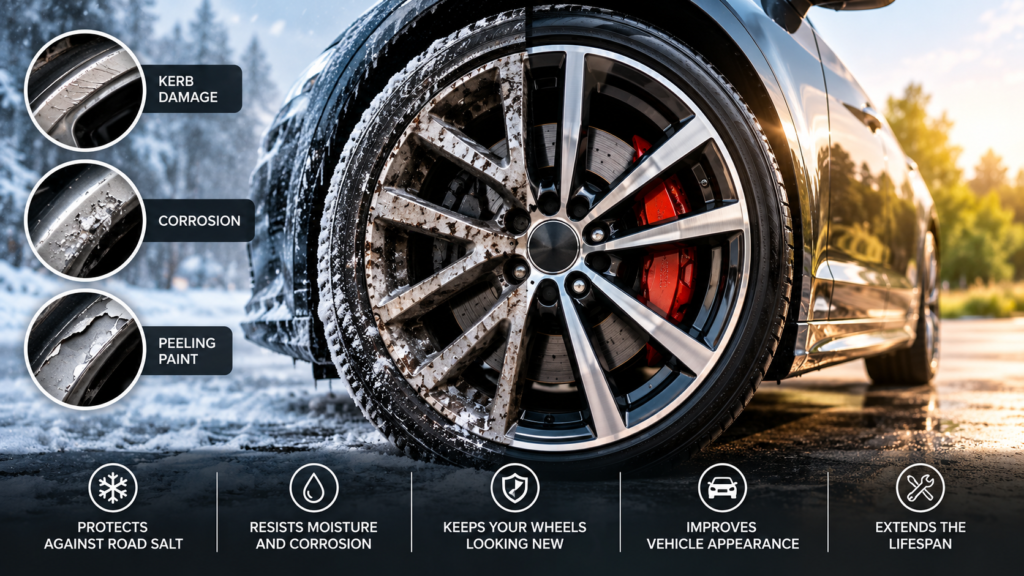
Alloy wheels are built to withstand everyday driving conditions, but they are not indestructible. Potholes, uneven road surfaces and unexpected impacts can sometimes cause cracks or structural damage.
A cracked alloy wheel is more than just a cosmetic problem. It can affect the safety and performance of your vehicle, particularly if the damage leads to air escaping from the tyre.
If you have noticed a crack in one of your wheels, you may be wondering whether it can be repaired or whether you need to replace it.
In this guide, we explain what causes alloy wheel cracks, how to recognise the warning signs and why professional inspection is important.
What Causes Alloy Wheels to Crack?
There are several reasons why alloy wheels can develop cracks.
1. Hitting Potholes
Potholes are one of the common causes of alloy wheel damage.
When a vehicle travels over a deep pothole, the sudden impact can place significant stress on the wheel. Depending on the speed, impact and wheel condition, this may result in bending or cracking.
2. Driving on Uneven Roads
Repeated impacts from rough roads, raised surfaces and damaged road edges can contribute to wheel damage over time.
Driving carefully and reducing speed on uneven surfaces can help minimise unnecessary impacts.
3. Incorrect Tyre Pressure
Incorrect tyre pressure can affect how the tyre absorbs impacts from the road.
Under-inflated tyres may provide less protection for the wheel when hitting potholes or other road hazards.
Checking your tyre pressure regularly can help reduce the risk of avoidable damage.
4. Previous Wheel Damage
Wheels that have already suffered impacts or previous repairs may require additional inspection.
Existing weaknesses or damage can make them more vulnerable to further problems.
What Are the Warning Signs of a Cracked Alloy Wheel?
Not every crack is immediately visible, so it is important to pay attention to changes in your vehicle’s behaviour.
Here are some common warning signs.
1. Repeated Tyre Pressure Loss
If one tyre repeatedly loses pressure without an obvious puncture, a damaged or cracked wheel could be responsible.
Air may escape through a crack in the wheel, particularly when the damage affects the area where the tyre seals against the rim.
2. Vibrations While Driving
A damaged or deformed wheel can sometimes cause unusual vibrations through the steering wheel or vehicle.
However, vibrations can have several causes, so a proper inspection is necessary.
3. Visible Cracks Around the Rim
Some cracks can be seen by inspecting the wheel carefully.
Look for unusual lines, splits or damage around the inner barrel, spokes and rim edges.
Not all cracks are easy to identify without removing the wheel from the vehicle.
4. Sudden Loss of Air Pressure
If your tyre suddenly loses pressure following an impact with a pothole or kerb, the wheel may have suffered damage.
Stop in a safe location and arrange a professional inspection rather than continuing to drive on a damaged wheel.
Can a Cracked Alloy Wheel Be Repaired?
Some alloy wheel cracks may be technically repairable, but not every damaged wheel is suitable for repair.
The decision depends on several factors, including:
- The location of the crack.
- The length and depth of the damage.
- The wheel’s material and construction.
- The extent of any additional deformation.
- Previous repairs or damage.
- Whether the wheel can be restored to a safe condition.
A professional assessment is essential before any repair work is considered.
In some cases, replacing the wheel is the safest option.
How Does Professional Alloy Wheel Crack Repair Work?
Where a repair is considered appropriate, the process depends on the type and location of the damage.
A professional assessment may involve the following stages.
Step 1: Initial Inspection
The wheel is inspected to identify the location and extent of the crack.
The specialist also checks for bends, deformation and other signs of structural damage.
Step 2: Assessing Repair Suitability
The wheel is assessed to determine whether a repair can be carried out safely and appropriately.
Not every crack can or should be repaired.
Step 3: Appropriate Repair Method
If the wheel is suitable, an appropriate specialist repair method may be considered.
Any welding or other structural repair must be carried out by a competent specialist using suitable procedures.
Step 4: Final Inspection
After any approved repair, the wheel should undergo appropriate checks to assess its condition and suitability for use.
A cosmetic refurbishment alone cannot make a structurally unsafe wheel safe.
Is It Safe to Drive With a Cracked Alloy Wheel?
Driving with a cracked alloy wheel can be dangerous.
A crack may worsen under repeated driving loads, potentially causing further air loss or wheel failure.
If you suspect a crack:
- Avoid continuing to drive on the damaged wheel.
- Stop safely if you notice sudden tyre pressure loss.
- Do not attempt to hide the damage with paint or cosmetic repairs.
- Arrange a professional inspection.
- Follow the specialist’s advice about repair or replacement.
Your safety should always come before the appearance of your wheels.
Can Alloy Wheel Refurbishment Fix Cracks?
Alloy wheel refurbishment and structural crack repair are different processes.
Refurbishment generally focuses on improving the wheel’s cosmetic appearance through cleaning, preparation, painting, powder coating or diamond cutting.
Crack repair involves assessing structural damage and determining whether a safe repair is possible.
If your wheels have both cosmetic and structural damage, the structural condition must be addressed first.
How Can You Prevent Alloy Wheel Cracks?
Although it is not possible to prevent every type of wheel damage, a few simple habits can help reduce the risk.
- Avoid driving quickly over potholes.
- Reduce speed on rough or uneven roads.
- Maintain the correct tyre pressure.
- Check your wheels after significant impacts.
- Avoid driving with damaged or unsuitable tyres.
- Arrange professional inspections if you notice vibrations or repeated pressure loss.
Regular checks can help identify problems before they become more serious.
Professional Alloy Wheel Services in Slough
At Slough Wheel Refurbishment, we provide a range of alloy wheel services to help customers maintain and restore their wheels.
Our services include alloy wheel refurbishment, diamond cutting, powder coating, custom colour changes, crack inspections and repairs, and tyre fitting.
Whether you have noticed visible wheel damage or want to improve the appearance of your existing alloys, our team can help you explore the available options.
Contact Slough Wheel Refurbishment Today
A cracked alloy wheel should never be ignored. Understanding the damage and having it professionally assessed can help you make the right decision about repair or replacement.
If you are concerned about your alloy wheels, contact Slough Wheel Refurbishment to discuss your requirements.
Get in touch today to find out more about our alloy wheel inspection, repair and refurbishment services in Slough.